Is your smart device dropping connections in the field? Poor wireless components are usually the culprit behind signal loss. A bad factory will ruin even the best engineering designs. You absolutely must verify production quality on the floor before committing to a massive order.
Sourcing the right Wi-Fi Module is a make-or-break step in developing IoT devices, smart home appliances, and industrial technology. However, that hardware is only as reliable as the facility assembling it. Conducting a thorough factory audit serves as the ultimate final step to ensure your chosen supplier can actually deliver high-quality, compliant, and scalable wireless solutions. In this guide, we break down exactly how to audit a facility like a senior engineer, mitigating risks and securing a manufacturing partner you can trust.
Key Takeaways
RF Testing is Paramount: A credible factory must utilize advanced testing equipment from brands like Keysight or Rohde & Schwarz to verify throughput, Error Vector Magnitude, and overall signal integrity.
Traceability Ensures Quality: Complete component traceability from raw materials to the finished product prevents counterfeit chips from entering your supply chain.
Specialized Module Verification: Different modules demand different audit focuses. You might check power output stability for high-power units or integration testing protocols for SDIO interfaces.
Compliance and Certifications: A verified factory must strictly adhere to ISO 9001 standards and produce boards that easily pass FCC, CE, and RoHS certifications.
Automation Equals Consistency: High levels of automation in Surface Mount Technology lines and Automated Optical Inspection directly correlate with lower defect rates.
Why is a Factory Audit Crucial for Wireless Component Sourcing?
Mitigating Supply Chain Risks
Finding reliable electronic components means dodging middleman traps. A proper factory audit cuts through the noise. It shows you exactly who you are dealing with, ensuring you are partnering directly with a capable manufacturer rather than a broker passing off outsourced work. An on-site visit reveals the reality of their component supply chain. You want to see stable, direct relationships with major chipset vendors. This prevents sudden production halts caused by component shortages or the unauthorized use of secondary-market chips.
Furthermore, industry trends have shifted dramatically over the last few years. Following the severe global chip shortages, the IoT manufacturing sector is moving away from purely cost-driven sourcing. Today, the focus is heavily on supply chain resilience. Top-tier brands are now auditing facilities specifically for localized component sourcing, direct silicon vendor partnerships, and transparent inventory buffers. Factories that demonstrate dual-sourcing capabilities are currently winning out over those relying on fragile, just-in-time global logistics.
Ensuring Long-Term Product Reliability
Wireless connectivity serves as the invisible backbone of modern smart devices. If a module fails in the field, it triggers a cascade of expensive product recalls, scathing user reviews, and severe brand damage. By performing an upfront factory audit, buyers can evaluate the manufacturer's overarching quality control philosophy. Verifying that the factory implements strict testing protocols before shipping allows companies to protect their brand reputation. Consequently, this significantly reduces long-term warranty costs.
Validating Production Capacity
Hand-soldering a hundred perfect prototypes is easy. Scaling that output to 100,000 units a month takes serious infrastructure. During an audit, assessing the actual production capacity is critical. This involves counting active assembly lines, calculating the cycle time per board, and reviewing workforce shift schedules. Confirming scalability ensures the supplier can meet your delivery deadlines during peak market seasons without sacrificing build quality.
Assessing Manufacturing Capabilities and Production Lines
Advanced Surface Mount Technology Lines
The physical assembly of a wireless board requires extreme precision. When walking the factory floor, pay close attention to the placement equipment. High-quality wireless components often utilize micro-components like 0201 or 01005 footprints that are barely visible to the naked eye. You must verify that the factory uses modern, high-speed pick-and-place machines capable of handling these tight tolerances without placement deviation.
Automated Optical Inspection and X-Ray Testing
Human visual inspection is vastly insufficient for modern printed circuit board assemblies. A qualified facility must integrate Automated Optical Inspection directly into the line to catch soldering defects, tombstoning, or misaligned components immediately. In addition, because many modern chipsets utilize Ball Grid Array packaging, the factory must possess 3D X-Ray machines. These machines inspect the hidden solder joints beneath the chips, ensuring no voids or bridging exist.
Cleanroom Standards and ESD Protection
Radio Frequency components are notoriously sensitive to static electricity and environmental contaminants. The audit must rigorously verify the facility's Electrostatic Discharge protocols.
Audit Area
Verification Criteria
Worker Apparel
Use of ESD-safe smocks, grounded wrist straps, and anti-static footwear across all zones.
Flooring
Installation of grounded epoxy or ESD-safe floor mats in every single assembly area.
Environment
Strict humidity control kept typically between 40% and 60% relative humidity to naturally reduce static buildup.
Rigorous Quality Control and RF Testing Protocols
Incoming Quality Control to Outgoing Quality Control
A structured quality control framework is the true hallmark of a reliable manufacturer. Your audit should physically track the flow of materials from the loading dock straight to the shipping bay.
Incoming Quality Control: How does the factory verify incoming raw materials? They should systematically check PCB thickness, copper weight, and component authenticity.
In-Process Quality Control: Are operators checking the solder paste thickness and reflow oven temperature profiles daily?
Outgoing Quality Control: What is the final sampling plan before shipment? A strict Acceptable Quality Limit standard must be clearly documented and enforced.
RF Calibration and Performance Testing
Unlike standard electronics, wireless hardware requires specialized calibration. Walk the testing floor and look for industry-standard test instruments. The factory must test every single unit for critical metrics. They need to check Transmit Power to ensure signal reach, Receive Sensitivity for picking up weak signals, and Error Vector Magnitude to confirm the clarity of the modulated signal.
Environmental and Reliability Testing
To guarantee the hardware will survive real-world conditions, you need to inspect the reliability testing laboratory. Listen for the hum of thermal shock chambers used to simulate rapid temperature changes. Check for humidity chambers designed for moisture resistance testing. Specifically, observe the burn-in racks where boards are powered on at elevated temperatures, often around 85 degrees Celsius, for extended periods to weed out early-life component failures.
Verifying Component Traceability and Supply Chain Management
Bill of Materials Adherence
Unauthorized component substitution is a major hidden risk in contract manufacturing. A factory might quietly swap a specified capacitor for a cheaper alternative. This fundamentally alters the RF tuning and causes connection drops. During the audit, select a random unit from the line and request its Bill of Materials. Cross-reference the physical components on the board with the approved engineering documentation to ensure strict adherence.
Digital Traceability Systems
If a defect is discovered post-launch, you need to know exactly which batch is affected to avoid a massive recall. Modern factories utilize Manufacturing Execution Systems linked to QR codes laser-etched onto every PCB. The auditor should test this system live. Scan a board on the floor and verify if the software can trace it back to the exact date of manufacture, the specific assembly line used, and the lot numbers of the raw materials.
Evaluating Specific Wi-Fi Module Categories
When auditing a manufacturing facility, a one-size-fits-all approach is useless. Different wireless applications demand distinct manufacturing tolerances, testing fixtures, and quality assurance protocols. A thorough factory audit must evaluate whether the supplier possesses the specialized infrastructure required to produce your specific category of wireless hardware.
Auditing for Embedded IoT and Medical Devices
Sourcing a wifi module embedded for critical infrastructure requires uncompromising quality control. Take a standard 1T1R 802.11ac module like the M8811CU2 series. It relies on a precise RTL8811CU chipset delivering 433Mbps over a USB 2.0 interface. If the factory's placement lines cannot handle the ultra-small passive components surrounding this chip with near-zero deviation, the data rate will plummet in the field.
During the audit, your primary focus should be on miniaturization capabilities and long-term reliability testing. Medical and industrial applications require strict environmental resilience. Inspect the reliability testing lab to verify the presence of programmable thermal shock chambers. The facility should routinely subject sample batches to extreme temperature cycling, spanning -40 to +85 degrees Celsius, to validate that performance remains stable under thermal stress.
Testing Standards for High Power Hardware
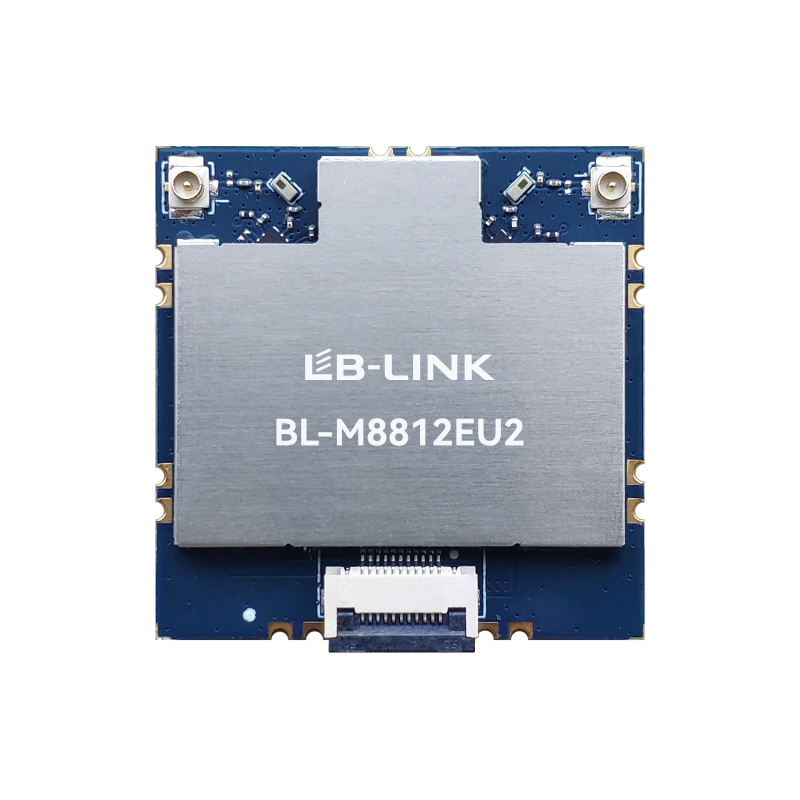
Hardware designed for extended range presents unique manufacturing challenges. When evaluating the production line for a high power USB WiFi Module, your audit must center on Power Amplifier consistency. Consider a 2T2R configuration like the M8812EU2 series, which pushes 867Mbps using the RTL8812EU chip. High transmit power generates significant heat, which can degrade the signal and cause thermal throttling if poorly managed.
Observe the assembly process for thermal pads, heat sinks, and shielding cans. The application of thermal paste must be automated and highly consistent. Manual application often leaves air gaps that cause localized overheating. Additionally, high-power devices must undergo continuous high-throughput stress testing to ensure the power output remains stable over extended periods of continuous transmission.
Verification for SDIO Interface Integration
Unlike standard external interfaces, modules demanding tight integration with a host microcontroller need precise timing. When auditing a facility producing a wifi module sdio interface, the focus shifts to driver synchronization. For instance, testing an RTL8731BU based module running 802.11n requires custom jig testing fixtures.
Verify the design and maintenance of these fixtures. They must simulate the exact host environment to validate seamless data transfer rates, interrupt handling, and driver compatibility. Ask the engineering team to demonstrate their throughput testing procedures using tools like iPerf. This provides empirical evidence that the hardware can sustain its advertised data rates without packet loss. Finally, ensure they have a robust system to guarantee the correct, customer-specific firmware is flashed onto the memory.
On-Site vs. Remote Factory Audits: Which is Better?
The landscape of supplier verification has evolved significantly. Buyers now choose between traditional physical inspections and digitally enabled remote assessments. Selecting the right approach depends heavily on your order volume, risk tolerance, and product complexity.
The Rise of Remote Audits
Remote audits have become an efficient method for conducting preliminary supplier vetting. Utilizing live high-definition video feeds, digital document sharing, and screen-sharing technologies, auditors can evaluate a factory without international travel. A successful remote audit relies on the factory’s digital maturity. You should request live video walkthroughs of the incoming material area and ask the factory to share their software screens in real-time to verify digital traceability.
When to Conduct an On-Site Audit
Despite the convenience of remote assessments, an on-site audit remains indispensable for high-volume enterprise orders. Physical inspections allow you to observe undocumented workflows and identify subtle quality control issues that a camera lens might purposefully miss. Being on the factory floor enables you to physically inspect grounding protections, such as testing the mats at workstations, and independently verify the climate-controlled storage conditions of sensitive raw materials.
Major Red Flags to Watch Out For During Your Audit
Identifying a reliable manufacturing partner is as much about spotting systemic failures as it is about verifying capabilities. Even facilities that appear modern can harbor underlying practices that jeopardize product reliability. Remain vigilant for the following critical red flags.
Outdated or Uncalibrated Test Equipment
Testing is the backbone of wireless manufacturing. A major red flag is the presence of outdated or uncalibrated test equipment. Every spectrum analyzer and comprehensive tester must bear a valid calibration sticker from a certified third-party laboratory, typically holding ISO/IEC 17025 accreditation. Uncalibrated equipment will provide fundamentally unreliable data, easily passing defective units that will suffer from poor range and frequent disconnections.
Lack of Clear Standard Operating Procedures
Consistency in manufacturing is achieved through rigid adherence to standardized processes. If you walk the assembly line and notice a lack of visual Standard Operating Procedures at individual workstations, it indicates a severe lapse in quality management. Workers relying on memory to assemble or test components inevitably introduce human error. Clear guidelines must be displayed at eye level, detailing exact steps and quality criteria.
Poor Yield Rate Transparency
A trustworthy manufacturer operates with transparency, especially regarding production errors. If a factory claims a near-perfect First Pass Yield without the data to substantiate it, they are hiding inefficiencies. During the audit, examine their rework stations. If you spot a large, undocumented pile of boards awaiting manual soldering rework, the factory is likely suffering from systemic placement issues. Excessive manual rework degrades copper pads and introduces latent defects.
Conclusion
Conducting a factory audit for wireless components is a meticulous engineering process that goes far beyond checking a few compliance boxes. By rigorously verifying a facility's placement precision, testing accuracy, and component traceability, you safeguard your end product's success. Whether you require specialized integration testing for SDIO interfaces or high-power thermal validation, paying attention to these critical details protects your brand and your customers.
Partnering with a fully vetted, transparent, and technologically advanced manufacturer ensures your smart devices will hit the market with flawless connectivity and robust, long-term reliability. Don't leave your wireless performance to chance. To ensure your next project is built on a foundation of proven manufacturing quality, explore LB-Link's certified production capabilities and highly tested range of wireless solutions today.
FAQ
How long does a standard Wi-Fi module factory audit take?
A comprehensive on-site audit typically requires one to two full business days. The duration depends heavily on the size of the manufacturing facility and the depth of testing verification required by your engineering team. Conversely, remote audits are highly focused and can often be completed in a few hours, usually spread over a couple of days to accommodate different time zones and document reviews.
What is the most important RF test to verify during an audit?
Error Vector Magnitude and Transmit Power are arguably the most critical metrics to evaluate. Error Vector Magnitude measures the precise quality of the modulated signal. Verifying this ensures the hardware will deliver stable, high-speed data throughput without dropping connections, especially when utilizing complex modulation schemes.
Can a factory audit guarantee my product will pass FCC/CE certification?
While a factory audit cannot absolutely guarantee final product certification, it drastically reduces your risk. Regulatory approval also depends on your overall enclosure and antenna design. However, verifying that the factory performs strict pre-compliance testing ensures the baseline hardware operates within legal spectrum limits, significantly smoothing the path to final certification.
What should I look for when auditing a factory for embedded applications?
For embedded applications, you must focus heavily on the factory's placement precision and their component miniaturization capabilities. Additionally, closely inspect their thermal aging and environmental stress tests. Embedded units often operate in tightly enclosed, heat-sensitive environments, making long-term thermal stability an absolute necessity for product survival.
Why is component traceability important?
Traceability ensures that if a defect is discovered after deployment, the manufacturer can trace the exact failure back to a specific batch of chipsets or passive components. This system allows for highly targeted product recalls and rapid engineering troubleshooting, protecting your bottom line rather than forcing you to replace an entire untracked product line.
What is an acceptable yield rate for a wireless module factory?
A top-tier manufacturer should consistently demonstrate a First Pass Yield of 98% or higher on standard wireless boards. For highly complex or ultra-miniature designs, an initial yield of 95% might be acceptable during early production runs, provided there is a clear, documented engineering plan to optimize the process and reduce manual rework.
How do you verify component authenticity during a factory audit?
You verify authenticity by auditing the factory's Incoming Quality Control procedures and their purchasing channels. Ask to see invoices directly from authorized distributors or original silicon vendors like Realtek. Additionally, check if the factory uses digital microscopes to inspect chip laser markings and date codes against the manufacturer's official database to spot counterfeit or recycled silicon.
Guangming District, Shenzhen, as a research and development and market service base, and equipped with more than 10,000m² automated production workshops and logistics warehousing centers.