Autonomous Mobile Robots (AMRs), Automated Guided Vehicles (AGVs), collaborative robotic arms and industrial inspection robots demand wireless connectivity that can maintain stable links while moving dynamically across factory floors, warehouses and smart buildings. Traditional Wi-Fi 5 / Wi-Fi 6 modules often suffer from roaming packet loss, high latency spikes, limited bandwidth and coexistence interference in metal-rich industrial environments.
As robotic systems increasingly integrate LiDAR, multi-camera vision, AI edge computing and multiple peripheral sensors, a single wireless link can no longer meet all communication requirements. Wi-Fi 7 multi-protocol combo modules become the ideal communication hub for modern robotics.
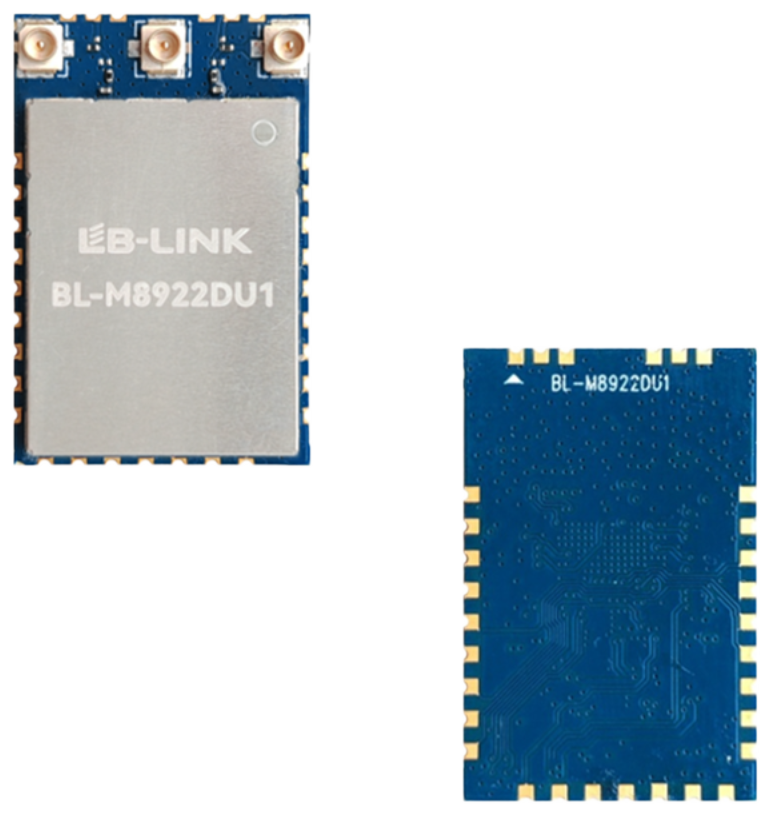
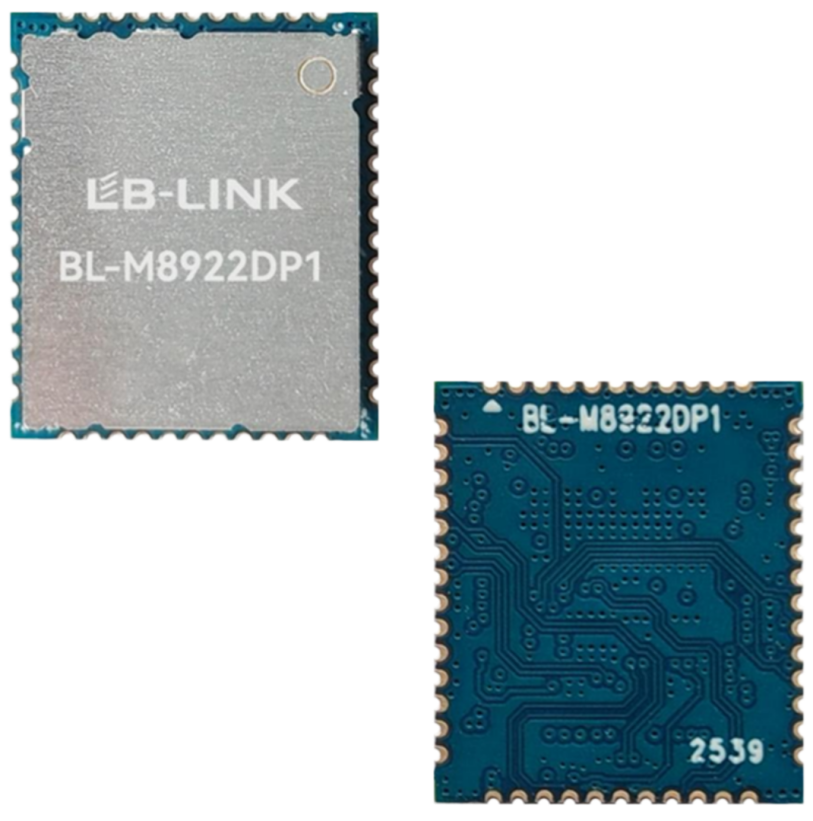
LB-LINK launches two Realtek RTL8922 based Wi-Fi 7 modules: BL-M8922DU1 and BL-M8922DP1. Both adopt 802.11be Wi-Fi 7 2×2 EHT160 architecture, supporting triple-band 2.4G/5G/6G, DBCC dual-band concurrent multi-link operation, with Bluetooth 5.4 + Zigbee 3.0 + Thread 1.3 integrated on one compact module. This all-in-one design simplifies robot hardware design, improves mobility reliability and reduces BOM cost.
Core Wireless Challenges Facing Industrial Robots
Before diving into our module solutions, let's review the most common wireless pain points robot OEMs encounter:
Roaming instability during movement: When AMRs travel between access points, handover delay and packet loss can trigger emergency stop, navigation failure or video stream interruption.
Limited bandwidth for high-volume sensor data: LiDAR and multi HD cameras generate massive point cloud and image data, requiring high throughput and wide channel bandwidth.
Spectrum interference in factories: Metal shelving, motors and dozens of nearby Wi-Fi devices create heavy interference on 2.4G/5G bands.
Multiple separate radio chips raise BOM & PCB cost: Engineers need separate chips for Wi-Fi, BLE, Zigbee sensor networks, leading to larger PCB footprint, more antenna layout work and higher power consumption.
Different host interface requirements: Some robot controllers use PCIe industrial mainboards, while ARM-based robot platforms prefer high-speed USB interfaces.
Why Wi-Fi 7 + DBCC Is Built for Mobile Robotics
Wi-Fi 7 (802.11be) brings revolutionary upgrades for mobile robots. The key technology adopted in BL-M8922 series is DBCC (Dual Band Concurrent Multi-Link).
Instead of relying on one single radio link, DBCC transmits data simultaneously over two different frequency links. If one link weakens or suffers interference during robot movement, the second link acts as redundancy. This drastically cuts roaming latency and packet loss during AP handover, the most critical metric for AGV/AMR safety.
2×2 EHT160, up to 2402 Mbps throughput: Wide 160MHz channel to support high-speed point cloud and vision data transmission.
Triple-band 2.4GHz / 5GHz / 6GHz: 6GHz band offers clean spectrum with minimal interference, prioritized for low-latency robot control and high-definition image transmission; 5GHz serves as the main high-speed data channel for navigation; 2.4GHz is used for BLE/Zigbee/Thread peripheral sensors and short-range control.
All-in-one multi-protocol radio: Wi-Fi + BT5.4 + Zigbee 3.0 + Thread 1.3 in one module, eliminating extra RF chips for sensor networks, simplifying antenna layout and saving PCB space.
BL-M8922DU1 vs BL-M8922DP1: Two Options for Different Robot Form Factors
Both modules share the same Wi-Fi 7 radio performance, multi-protocol stack and DBCC capability. The difference lies in host interface and size, helping customers select based on robot hardware constraints.
802.11 abgn/ac/ax/be (Wi-Fi 7), 2×2 EHT160, up to 2402 Mbps
802.11 abgn/ac/ax/be (Wi-Fi 7), 2×2 EHT160, up to 2402 Mbps
Bands
2.4G / 5G / 6G triple band
2.4G / 5G / 6G triple band
Bluetooth / Multi-protocol
BT5.4; Zigbee 3.0; Thread 1.3
BT5.4; Zigbee 3.0; Thread 1.3
Host Interface
USB3.2
PCIe
Key Feature
DBCC dual-band concurrent multi-link
DBCC dual-band concurrent multi-link
Size / Pins
27 × 17.8 mm, 31 Pins
13 × 15 mm, 50 Pins
Best For
Large AMRs, warehouse AGVs, inspection robots; ARM-based USB platforms; designs with relaxed PCB space and better RF/thermal margin
Compact collaborative robots, small mobile robots, embedded vision modules; x86 controllers via PCIe; space-constrained designs
Key Application Scenarios
Warehouse AGV & AMR: Stable roaming across warehouse AP coverage, reliable navigation command delivery and real-time inventory camera upload.
Industrial Collaborative Robot: Low-latency control link, BLE connection for gripper sensors, Zigbee/Thread for factory IoT sensor network.
Indoor & Outdoor Inspection Robot: 6GHz clean band for HD video streaming, multi-link redundancy to avoid connection drop when passing metal obstacles.
Humanoid Robot: Integrated multi-protocol to connect body sensors, remote control and AI vision data backhaul.
Conclusion
The robotics industry is shifting from basic wireless connectivity to reliable, low-latency, multi-function RF communication. Wi-Fi 7 DBCC multi-protocol combo modules become a critical hardware upgrade for next-generation autonomous robots.
LB-LINK BL-M8922DU1 and BL-M8922DP1 deliver a unified communication platform, removing the complexity of multiple discrete radio designs. Whether your robot design requires USB3.2 or PCIe interface, large or ultra-small PCB footprint, LB-LINK provides optimized Wi-Fi 7 module options with full technical support for RF layout, driver porting and testing.
Guangming District, Shenzhen, as a research and development and market service base, and equipped with more than 10,000m² automated production workshops and logistics warehousing centers.